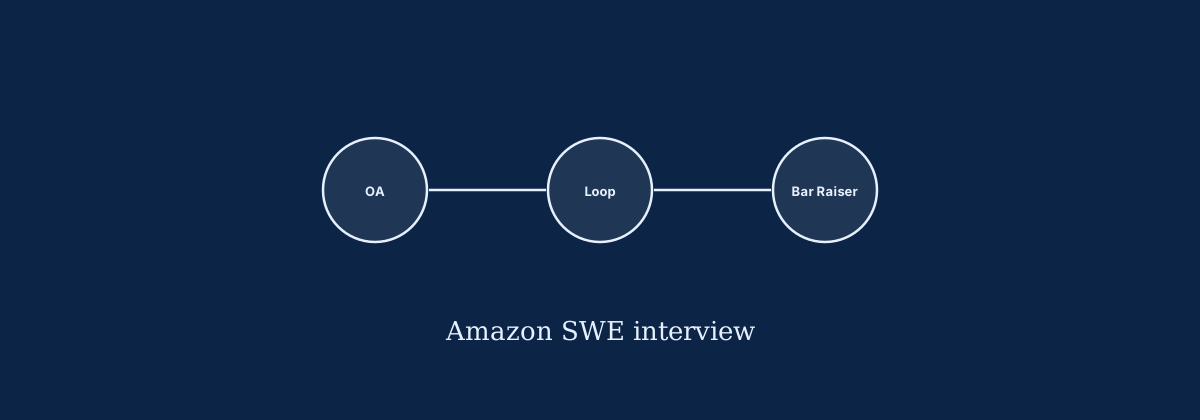
What you’re walking into
LP-ready story · why Amazon
L5: OA gate · L6: often skip OA
Code · design · OOD/deep-dive
Veto power · LP depth
Team → offer
Amazon’s process is predictable once you see the shape. Prep algorithms and Leadership Principles as first-class peers — LPs are not a soft add-on at the end. At staff (L6), interviewers are scoring leadership scope: initiatives you drove, hard technical decisions with lasting blast radius, and mentoring that changed how others ship.
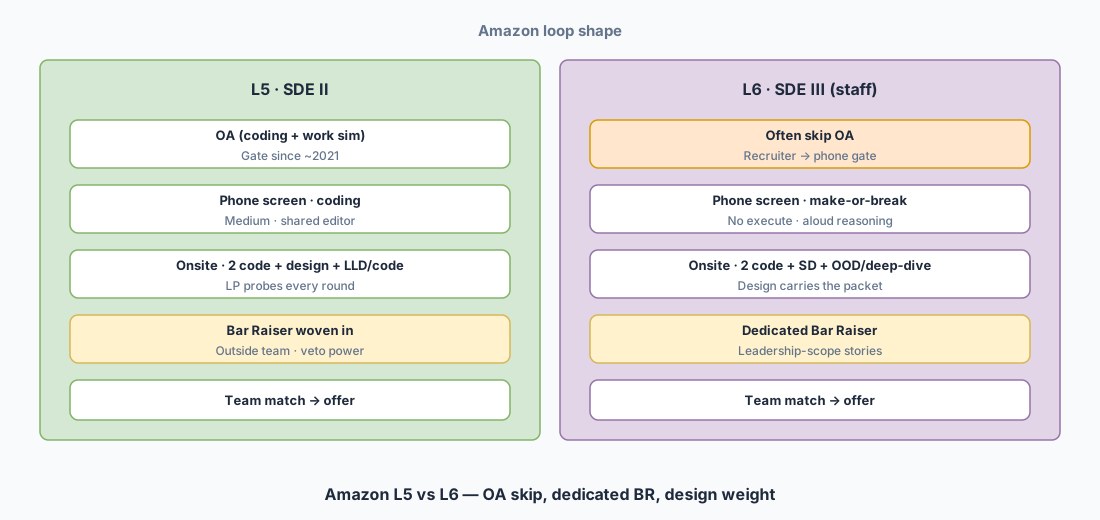
L5 (SDE II) loop shape
Common path for senior (not yet staff):
- Recruiter intro (~30 min)
- Online Assessment (coding + work-style / simulation pieces)
- Technical phone screen (coding)
- Onsite (usually virtual): ~2 coding, 1 system design, 1 LLD or extra coding
- Bar Raiser woven into the loop
- Team matching if needed → offer
L6 (SDE III / staff) — what changes
Many L6 candidates go straight from recruiter to phone to a staff-shaped onsite:
- Coding ×2 (still required — but rarely the differentiator)
- System design (highest weight for level)
- OOD or project deep-dive (team chooses)
- Dedicated Bar Raiser behavioral
They’re hiring for senior depth and leadership potential: initiatives led, hard technical decisions, mentoring, and LP evidence from scoped multi-year work. Weak Bar Raiser kills strong coding packets. Phone screen stakes: at L6 the coding phone often decides whether you see the loop — one medium problem, shared editor, often no execute. Practice reasoning aloud without a run button.
Bar Raiser vs committee hiring
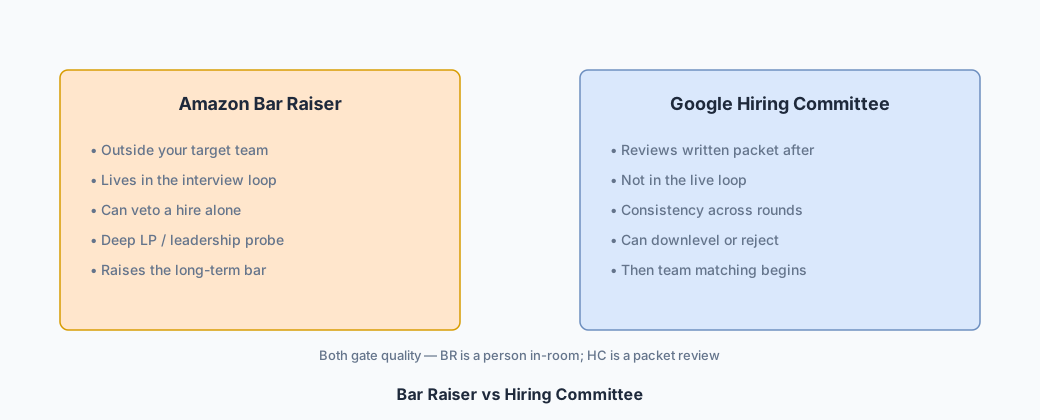
Amazon’s quality gate is a person in the room. The Bar Raiser is trained to protect the long-term bar, is usually outside your hiring team, and can veto even when every other interviewer says hire. Google’s analogous pressure is the Hiring Committee — a post-loop packet review. Prep differently: for Amazon, rehearse live LP follow-ups; for Google, ensure every round’s written feedback tells a consistent staff story.
Leadership Principles in practice
Don’t value-drop slogans. Map stories to LPs, then tell STAR stories with metrics. For L6, each story needs a scope sentence: who else changed behavior because of your decision? Prepare a catalog that covers conflict, ambiguity, delivery under pressure, and disagree-and-commit.
- Keep 6–8 stories tagged to multiple LPs
- Expect LP probes at the start or end of coding/design
- Bar Raiser will go deep — rehearse follow-ups, not just the happy path
- Staff stories: multi-team programs, standards you set, people you unblocked
Design as the L6 differentiator
At L5, a clean HLD with sensible tradeoffs clears the bar. At L6, interviewers listen for architectural leadership: how you’d migrate a live fleet, who owns which interface, what you’d refuse to build, and how you’d measure rollout risk. Pair system design practice with LLD if your loop includes OOD.
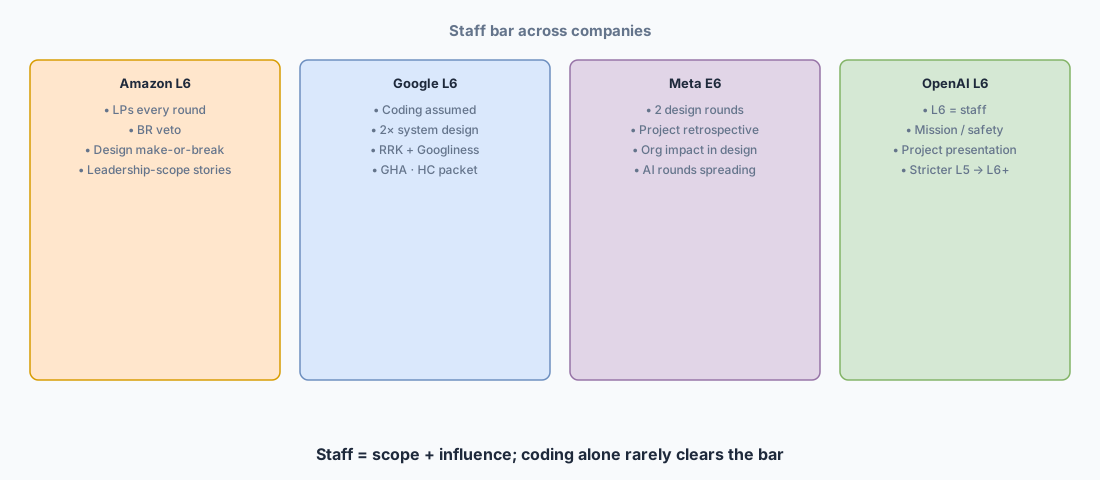
Staff prep checklist
- Coding: medium LeetCode patterns you can explain without an IDE run button — see coding series
- System design: 5–8 classic designs at Amazon-ish scale (retail, streaming, queues) with migration + failure modes
- LLD/OOD: parking lot / chess / rate limiter object models if your loop includes it — LLD path
- LPs: record Ownership + Conflict + Dive Deep; add one multi-team leadership story
- Mock one full “coding + 20 min LP” block and one dedicated BR mock
- Phone screen: practice no-execute shared-editor sessions aloud
Backend focus + Leadership Principles
Mediums · graphs · intervals
APIs · concurrency
Retail/queue scale
20–30 min behavioral
Veto · Dive Deep
Round scripts — first 2 minutes
Lattice study path for Amazon
- Crack any backend interview — prep plan (this index)
- Coding DSA roadmap → graphs/intervals emphasis
- LLD delivery framework → rate limiter / parking lot
- Core concepts → API design, indexing, consistency
- Technologies → DynamoDB, Redis, Kafka / queues
- Practice designs — retail/queue flavored
- STAR → big three → LP-tagged catalog
- Re-read this Amazon guide’s Bar Raiser + LP sections; mock BR follow-ups
Signal rubric — Amazon strong vs weak
7-day Amazon plan (week before)
- D−7: OA/phone pattern triage — 3 timed mediums; skim LPs list.
- D−6: LLD timed classic + concurrency hotspot narration.
- D−5: HLD mock (retail/queue) with failure domains + migration.
- D−4: LP catalog aloud — Ownership, Dive Deep, Backbone, Deliver Results.
- D−3: Coding + 20-min LP block (Amazon onsite shape).
- D−2: Bar Raiser mock — hostile-but-fair follow-ups on one story.
- D−1: Light warm-up; sleep; confirm links. No new topics.