Why prepare these three cold
45–90s · plant hooks.
Impact × Scope × You.
Cross-org · data-first.
TOC + a few STAR beats.
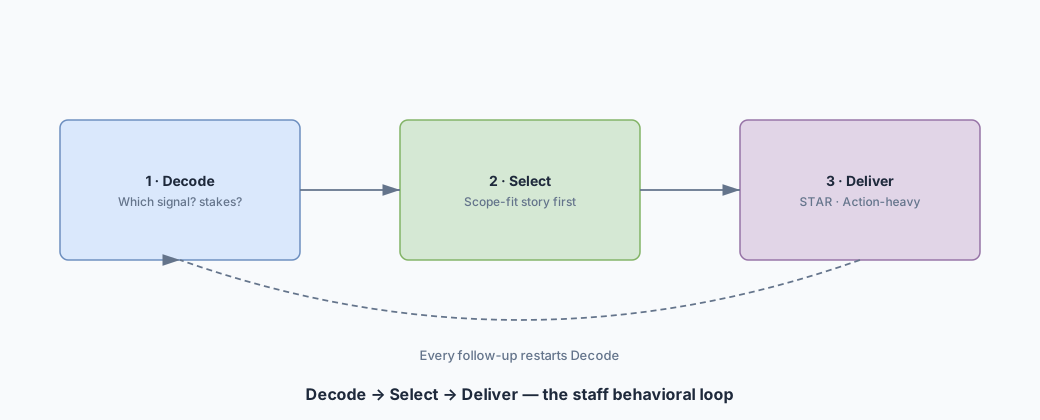
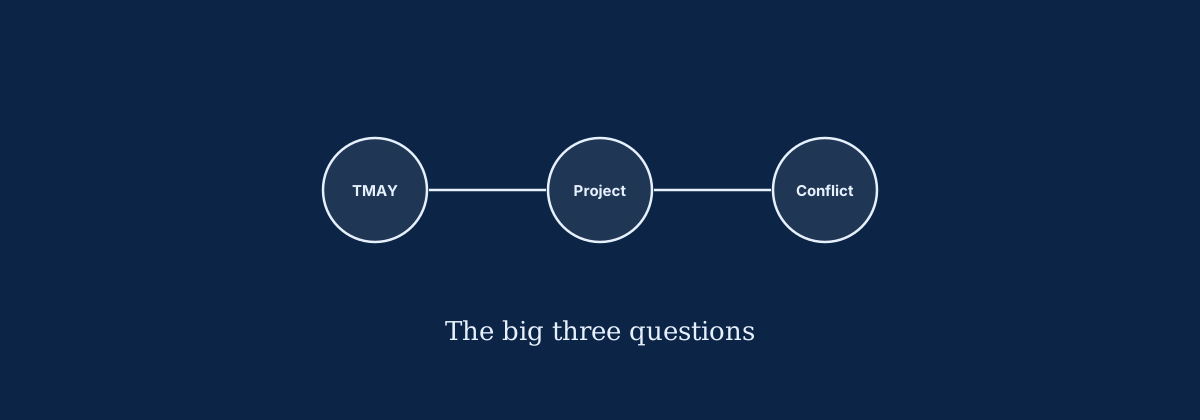
You cannot memorize every behavioral prompt. You can polish: Tell me about yourself (TMAY), favorite / most proud project, and a conflict you resolved. Nail them and you set scope, plant stories, and earn goodwill.
1 · Tell me about yourself
Keep it to ~45–90 seconds. Structure: personal summary → 2–3 impact bullets → forward-looking bridge to this role. No flattery speeches.
Likely follow-ups
2 · What project are you most proud of?
Your choice is the signal. Pick scope matching the level: impact, difficulty, your personal drive — not “it was a lot of work.”
Question
What project are you most proud of?
Signal: Ownership + ambiguity + results
What they really want: Taste (what you pick), personal actions, and concrete outcomes for users/business.
Likely follow-ups
Selection formula: maximize Impact × Scope × Personal contribution. If you must trade off, prioritize contribution — interviewers probe “what did you do?” harder than vanity metrics. Staff answers often use a short thematic TOC, then 2–3 STAR episodes inside the same arc (often outcome-predictive for the rest of the loop).
3 · Tell me about a conflict with a coworker
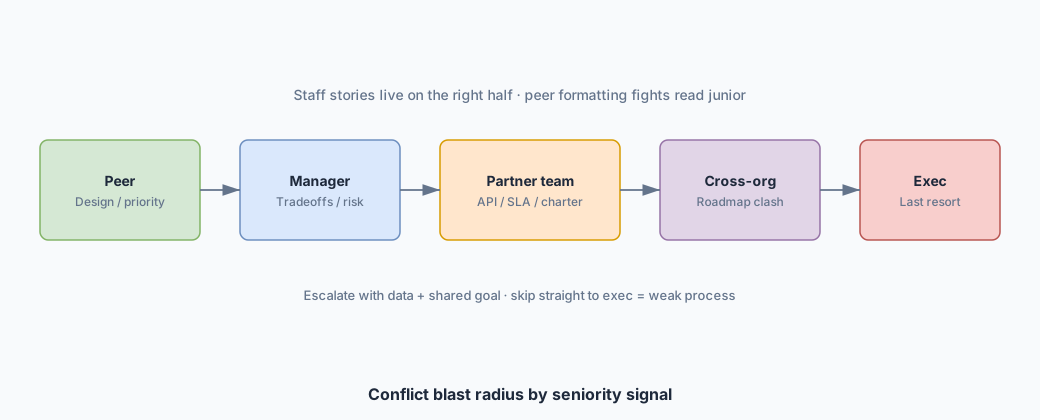
They want emotional maturity + collaborative problem-solving — not “I won” or “HR fixed it.” Name the shared goal, your part of the mess, and the durable fix.
Question
Tell me about a time you had a conflict with a coworker. How did you resolve it?
Signal: Conflict resolution + communication
What they really want: Can you disagree without contempt, seek data, and leave the relationship stronger?
Likely follow-ups
TMAY sketches by level
Record three versions (45s / 90s / 2 min). Use the short one unless they explicitly invite a longer walkthrough.
Staff drill: rehearse the three as a system
- TMAY plants the project + conflict hooks by name.
- Proud project uses the same arc TMAY teased — deeper Actions.
- Conflict can be a decision episode inside that project or a separate charter fight.
- Record 45s / 90s / 2 min TMAY; staff loops often invite the longer bridge.
The big three are not three unrelated monologues — they are one portfolio with three camera angles.
Plant hooks for the rest of the loop
In TMAY and proud-project answers, name stories you want them to ask about: “I can go deeper on the webhook incident if useful.” Good interviewers take the bait. That is legal steering — you are helping them collect signal efficiently.
- Never invent metrics — round honestly (“about 40%”) and offer how you measured.
- If resume and TMAY disagree on titles/dates, fix the resume first.
- Conflict story should not trash a named coworker; describe role + behavior.
Staff altitude on the favorite project
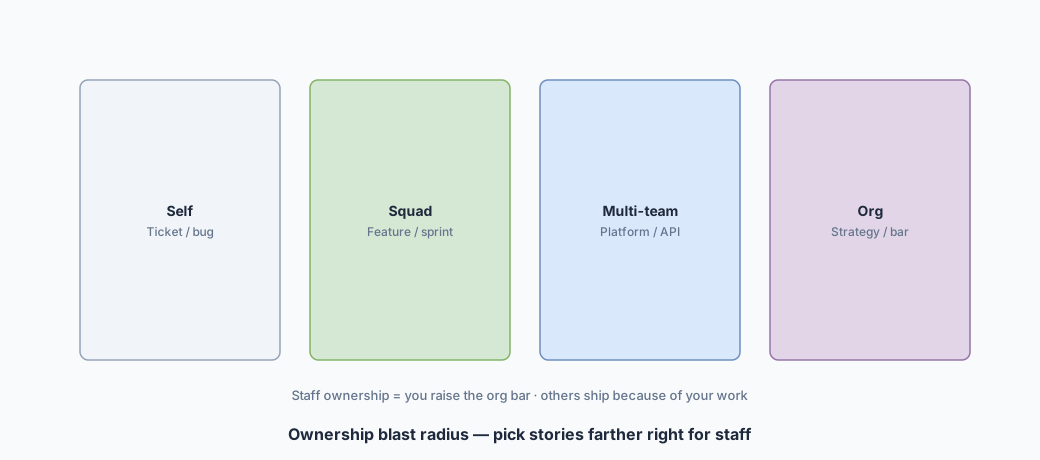
Score candidates with Impact × Scope × Personal contribution. At staff, Scope must include multi-team or multi-quarter leverage. If contribution is high but scope is a single service rewrite, label it senior and bring a second platform/org story.
Staff/Principal STAR answer banks
Big-three pitfalls
- TMAY as resume chronology — no ending that explains why this room.
- Proud project as feature tour — no stakes, tradeoffs, or your leverage.
- Conflict as villain story — coworker is cartoonishly wrong; you are pure.
- Same metrics in all three — sounds templated; vary the proof.
- No hooks planted — TMAY doesn’t set up the project or conflict they’ll ask next.
- Conflict without resolution path — disagreement ended in silence or escalation theater.
Follow-up Q&A on the big three
After each big-three answer, expect a probe. Steal the shape; swap your facts.