
How to read these answers
Not the numbers
Then stop talking
Swap stack & metrics
On why you leave
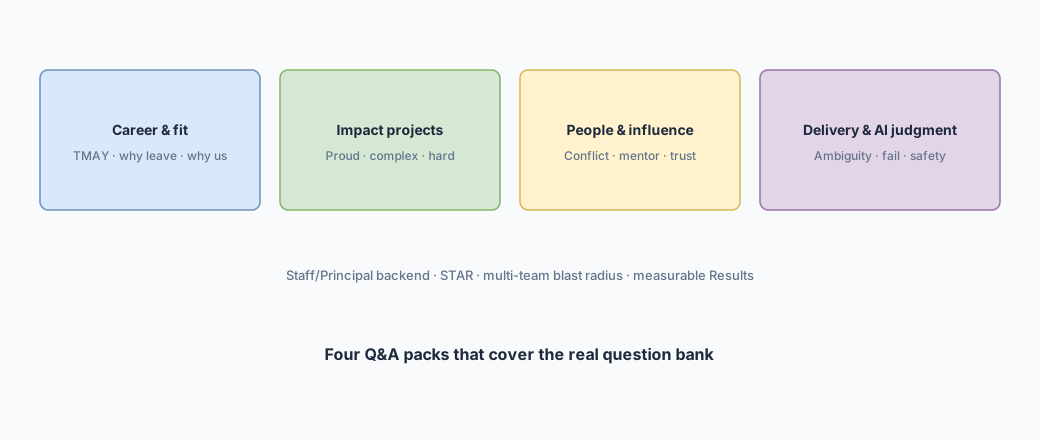
Opening: you and your role
Tell me about yourself
Aim: Give a 90-second arc that ends on why this room.
Describe your current role
Aim: Say what you own, who consumes it, and how you’re measured.
Why leave / why join
Why do you want to leave your current company?
Aim: Lead with what you’re running toward. Stay kind about where you are.
What attracted you to this company? (or: Why OpenAI / why us?)
Aim: Name 2–3 concrete hooks, then what you’ll do on day one.
Why are you interested in machine learning?
Aim: Be a backend engineer who respects ML systems — not a hype tourist.
How you’re seen / what you’re fixing
How would others describe you?
Aim: Borrow real peer language. Add one growth edge.
What are you trying to improve most professionally?
Aim: One edge + the habit you’re using to fix it.
What would you improve about your last role? / What does your manager like or dislike?
Aim: Balanced, specific, already in motion.
Signals rubric: opening / role
How interviewers hear answers in the opening / role cluster at staff / L6 backend.
Follow-up Q&A: opening / role
Interviewers almost always dig after your STAR. Each card is a likely follow-up with a full sample answer — swap in your facts; keep the shape.
30-minute rehearsal: opening / role
Signals rubric: why leave / why join
How interviewers hear answers in the why leave / why join cluster at staff / L6 backend.
Follow-up Q&A: why leave / why join
Interviewers almost always dig after your STAR. Each card is a likely follow-up with a full sample answer — swap in your facts; keep the shape.
30-minute rehearsal: why leave / why join
Signals rubric: how you’re seen / growth
How interviewers hear answers in the how you’re seen / growth cluster at staff / L6 backend.
Follow-up Q&A: how you’re seen / growth
Interviewers almost always dig after your STAR. Each card is a likely follow-up with a full sample answer — swap in your facts; keep the shape.