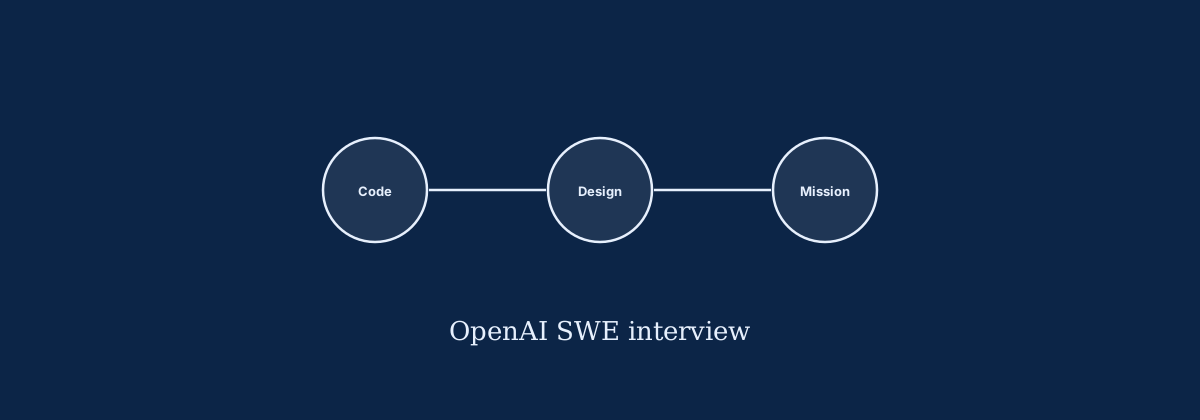
L5 is senior — L6 is staff
Mission · ownership · why OpenAI
Coding + architecture gates
Code · design · behavioral
Project presentation more common
Mission · safety · judgment

Confirm your exact round list with the recruiter. Treat published full menus as a superset.
Common L5 shape (and L6 extras)
- Recruiter / HM intro (mission + ownership screen)
- Coding screen
- Architecture / system design screen
- Onsite: coding, system design, behavioral (sometimes ×2), optional domain round
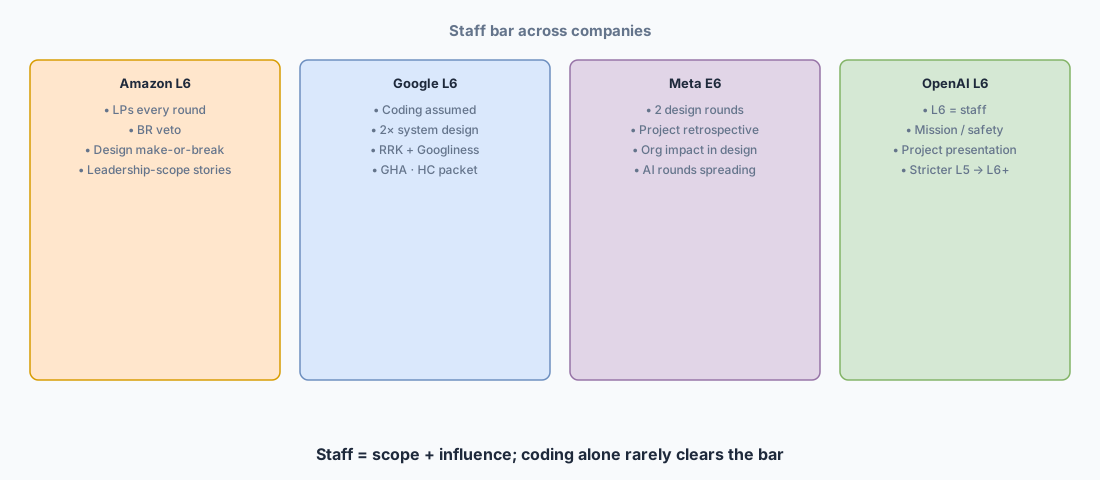
- Project presentation more common at L6+
Coding expects production-quality reasoning: how the solution integrates and fails at scale, not only the happy-path algorithm. Mission and safety are not optional flavor — interviewers listen for judgment about misuse, evaluation, and operational responsibility.
Design, mission, and behavioral emphasis
Design rounds probe requirements gathering, tradeoffs, and systems at OpenAI’s operational reality. Behavioral probes collaboration, influence, and judgment under ambiguity — plus whether your values fit the mission. At L6+, expect to present a real project and defend decisions in front of a mixed audience.
Nearby: Microsoft L63–L64 (deepened)
Microsoft senior loops (roughly L63–L64) are often 4–5 interviews over Teams: coding ×2–3 and system design, each with a pre-announced behavioral focus (often no separate behavioral round until higher levels). An OA or phone screen usually gates the loop. Ask the hiring manager what the team ships — prep relevance helps more here than at brand-only FAANG loops.
- Emphasize scoping ambiguous problems without spoon-fed requirements
- Design > classic OOD at senior levels; still brush LLD if the team is product/client-heavy
- Authentic “why Microsoft / why this product” beats brand worship
- Staff-adjacent levels: bring cross-team influence stories even when the loop looks “just coding + design”
- Each interviewer’s behavioral theme is announced — map one STAR story per theme in advance
Nearby: Airbnb G9 (deepened)
Airbnb G9 is the senior band. Expect a polished mix of coding, design, and values/culture fit with strong product sense. Marketplace tradeoffs (trust & safety, two-sided liquidity, quality bars) show up in both design and behavioral. Formats shift by org — confirm with your recruiter.
- Read recent engineering blogs; cite a concrete system you admire and why
- Product sense: host/guest incentives, abuse edges, and measurement
- Values fit is scored seriously — rehearse belonging, craft, and feedback stories
- Staff-leaning packets: show how you raised quality bars beyond your pod
Staff-aware prep checklist
- Confirm level: L5 senior vs L6 staff — ask about project presentation explicitly
- Mission brief: Charter + one safety/eval topic you can discuss for 10 minutes
- Coding: production-minded mediums — coding path
- Architecture screen: requirements, tradeoffs, operational failure — not only boxes
- Behavioral ×2: influence, ambiguity, responsibility — behavioral
- If L6+: 30–40 min project presentation with metrics, regrets, and research/eng interface
- Parallel tracks: Microsoft behavioral themes; Airbnb product + values
Backend focus + mission fit
Integrate · fail at scale
Eval · reliability
Ambiguity · influence
Responsibility
Defend a real project
Round scripts — first 2 minutes
Lattice study path for OpenAI
- Backend prep plan
- Coding — production-minded mediums
- Core concepts + API design + consistency
- Technologies — queues, caches, Postgres/Dynamo as needed
- One solid architecture mock from question breakdowns with ops/failure depth
- Behavioral + AI ownership questions
- Mission brief: charter notes + one safety/eval topic you can discuss 10 minutes
- If L6+: 30–40 min project presentation dry-run; this OpenAI guide’s leveling section
Signal rubric — OpenAI strong vs weak
7-day OpenAI plan (week before)
- D−7: Confirm level + whether a project presentation is expected.
- D−6: Coding mocks with “how this fails in prod” narration.
- D−5: Architecture mock — requirements, tradeoffs, operational failure.
- D−4: Mission/safety teach-back (10 min) + two behavioral stories.
- D−3: Influence/ambiguity STAR stories; skim AI ownership post.
- D−2: L6+: full project presentation dry-run; else second design mock.
- D−1: Light review; sleep; why-OpenAI in 90 seconds.