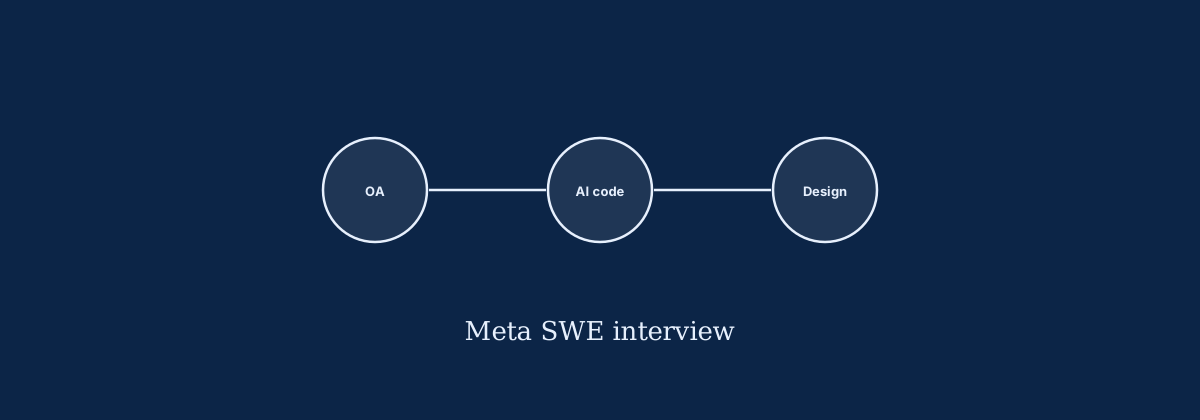
E5 vs E6 at a glance
E5: CodeSignal · E6: early level signal
Traditional + AI-enabled
Staff: org impact required
E6 project ownership
Fast team → offer
Meta moves fast. Your behavioral round can decide E5 vs E4 even when coding was fine. At E6, interviewers are listening for org impact in design: sequencing across teams, defaults you’d change, and programs you owned end-to-end.
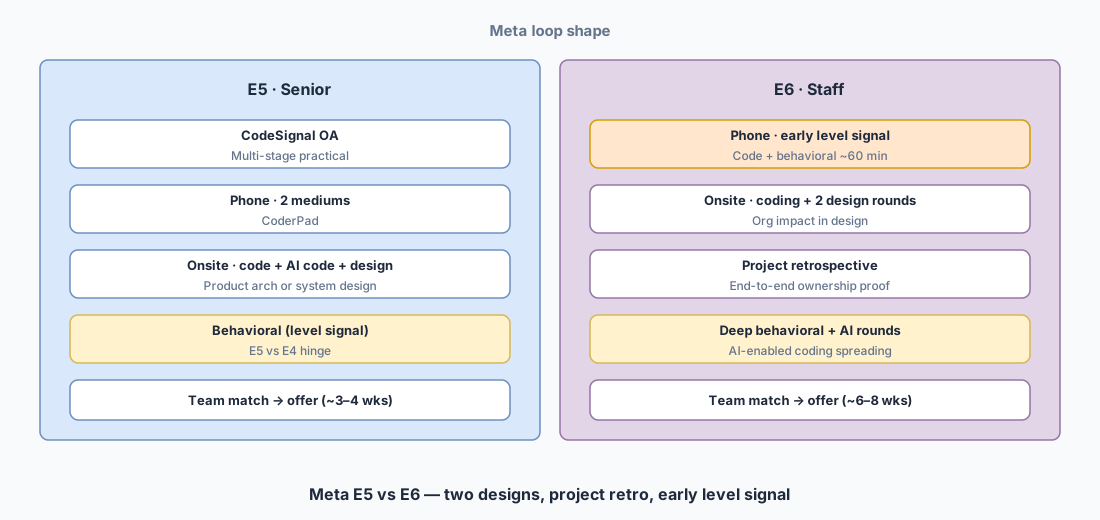
E5 (Senior) loop
- Online Assessment (CodeSignal, monitored) — newer gate as of ~2025
- Technical phone screen (~2 mediums in CoderPad)
- Onsite: traditional coding, AI-enabled coding (pilot), design or product architecture, behavioral
- Team match → offer
E6 (Staff) loop
Usual path: recruiter → phone screen (coding + early behavioral / level signal) → onsite with coding, two design-ish rounds, deep behavioral, and sometimes a project retrospective.
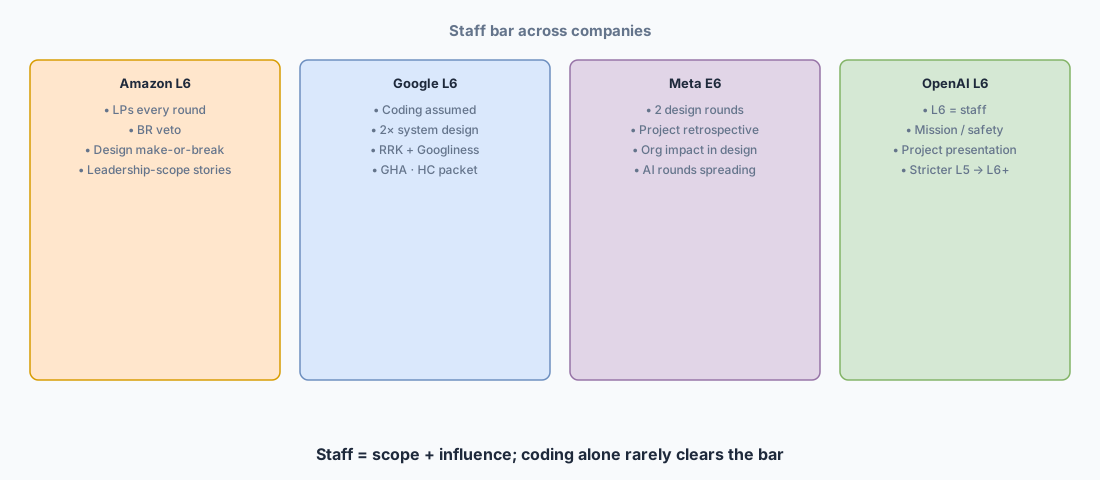
Staff bar: end-to-end ownership of complex programs, cross-team architecture, leading without authority. Prepare one flagship project you can narrate as a retrospective: problem, constraints, decisions, metrics, what you’d redo.
System design vs product architecture
Know which track you’re on. Product architecture leans product thinking, feature APIs, and tradeoffs users feel. System design leans reliability, scale, and data path. Ask the recruiter explicitly and prep the matching catalog.
Staff prep checklist
- OA (if E5 path): incremental feature builds with tests as the scoreboard
- Coding: two-medium stamina in plain editors — coding series
- Design: 6 product + 6 infra prompts; for E6 add org sequencing to each
- Project retro: 45-minute talk with metrics, diagrams, and honest regrets
- Behavioral: conflict, leadership without title, shipping under ambiguity — behavioral series
- AI round: rehearse prompting + verifying
- LLD if your team leans object modeling — LLD
E6 design includes org impact
In each design round, surface: which teams consume the API, migration strategy off the old path, ownership of failure budgets, and how you’d sequence rollout without freezing partner roadmaps. Coding still must be clean — polish is assumed.
- Two timed design mocks with org-impact narration
- One project retrospective dry-run (problem → bets → metrics → regrets)
- AI-enabled coding practice: you drive, model assists, you verify
- Behavioral catalog mapped to Meta values without value-dropping
Backend focus + Meta values
Practical · tests score
+ behavioral mix
You own correctness
E6: org sequencing
Impact stories
Round scripts — first 2 minutes
Lattice study path for Meta
- Backend prep plan
- Coding — two-medium stamina in plain editors
- OA path (E5): practice incremental feature builds with tests
- Caching · Redis · Kafka / queues (feed/async flavor)
- Design catalog: mix product + infra from question breakdowns (e.g. news feed, Instagram)
- LLD if your team leans object modeling
- Behavioral — conflict, leadership without title
- This Meta guide — E5 vs E6, design choice, org-impact section
Signal rubric — Meta strong vs weak
7-day Meta plan (week before)
- D−7: Two-medium phone simulation (35m code + 25m behavioral).
- D−6: Caching + async teach-back (Redis/Kafka) aloud.
- D−5: Product or SD mock #1 with user metric + failure modes.
- D−4: Design mock #2 with multi-team sequencing (E6).
- D−3: Project retro dry-run 45 min (metrics, regrets, standards).
- D−2: AI-assisted coding practice — you verify; values stories aloud.
- D−1: Light warm-up; sleep; confirm OA/onsite tooling.