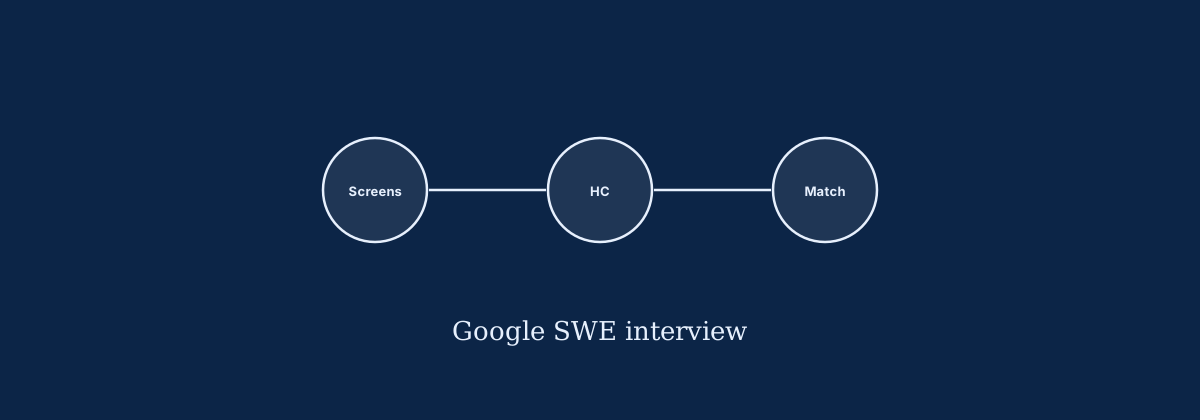
How Google hires seniors and staff
Phones · GHA at L6
Code · SD · RRK · Googliness
Written packet review
Teams sell you · you sell back
Level locked by packet
Google’s process is committee-driven. You are not done when the last interviewer smiles — written feedback must clear HC, then you sell yourself in team match. After remote AI-cheating spikes, many candidates need at least one in-person round. Ask your recruiter early so you can practice whiteboard, not only CoderPad.
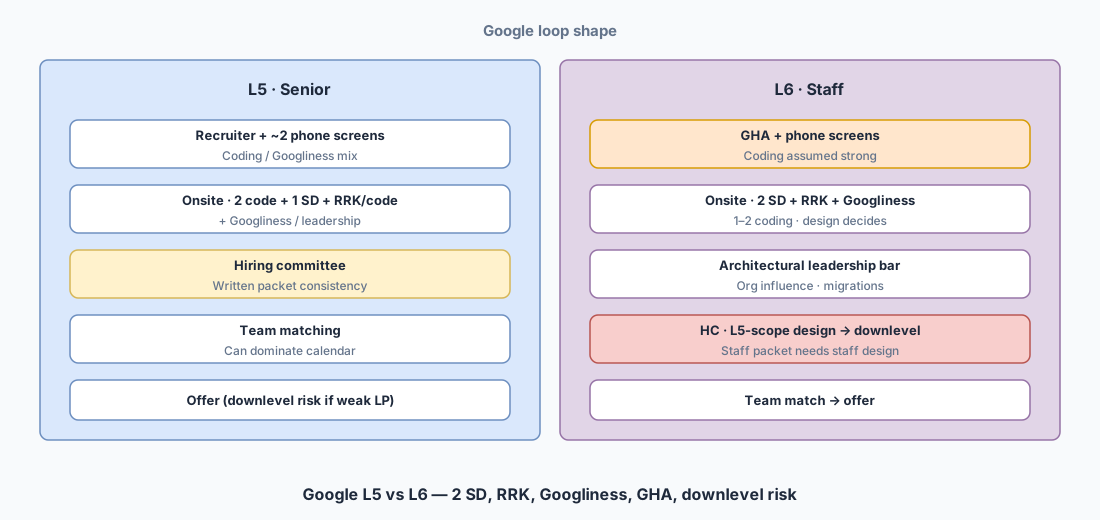
L5 (Senior) loop
- Recruiter screen (~30 min)
- Technical phone screens (often 2; some regions swap one for Googliness/behavioral)
- Onsite: coding ×2, system design, RRK or extra coding, Googliness/leadership
- Hiring committee → team matching → offer
Strong algorithms are table stakes. What separates L5 from L4 is influence without authority, mentoring signal, and design judgment beyond your immediate ticket queue.
L6 (Staff) — coding assumed, design decides
Many L6 candidates face a mandatory Google Hiring Assessment (GHA) — ~50 situational / values questions, no coding. A poor score can end the process; retakes are limited.
- Often 2 coding phone screens
- Onsite with ~1–2 coding, 2 system design, RRK, Googliness
- Loop mix varies — some see three design-heavy rounds
- HC reviews consistency: staff signal must appear in design + RRK, not only coding scores
Hiring Committee (and how it differs from Amazon)
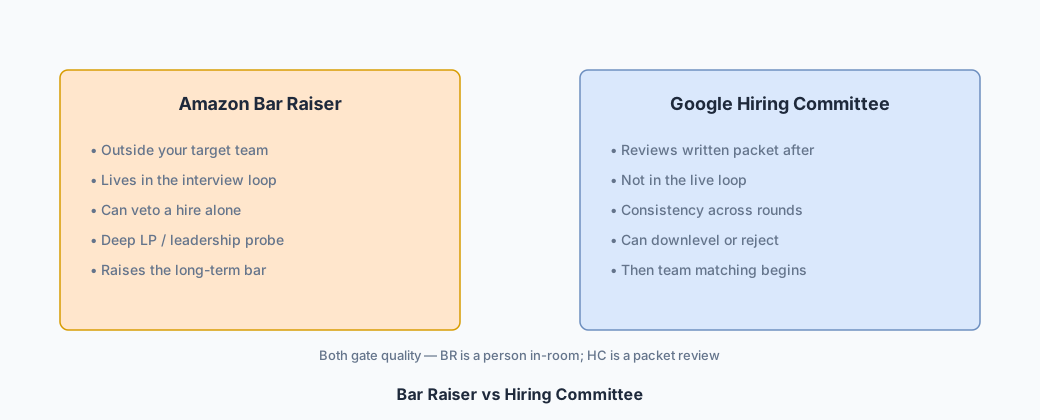
Unlike Amazon’s in-loop Bar Raiser, Google’s HC never met you live. Interviewers write detailed notes; the committee looks for a coherent level story. One “hire / L5” design note can outweigh two strong coding “hire / L6” notes. Align every round to the same staff narrative.
Googliness & RRK
Googliness / leadership probes collaboration, ethics, ambiguity, and how you raise the team. Use real conflict and growth stories — see the behavioral path.
Role Related Knowledge (RRK) digs into your domain: past systems, tradeoffs, and depth in the stack you’d join. Bring a project you can defend for 45 minutes.
Staff prep checklist
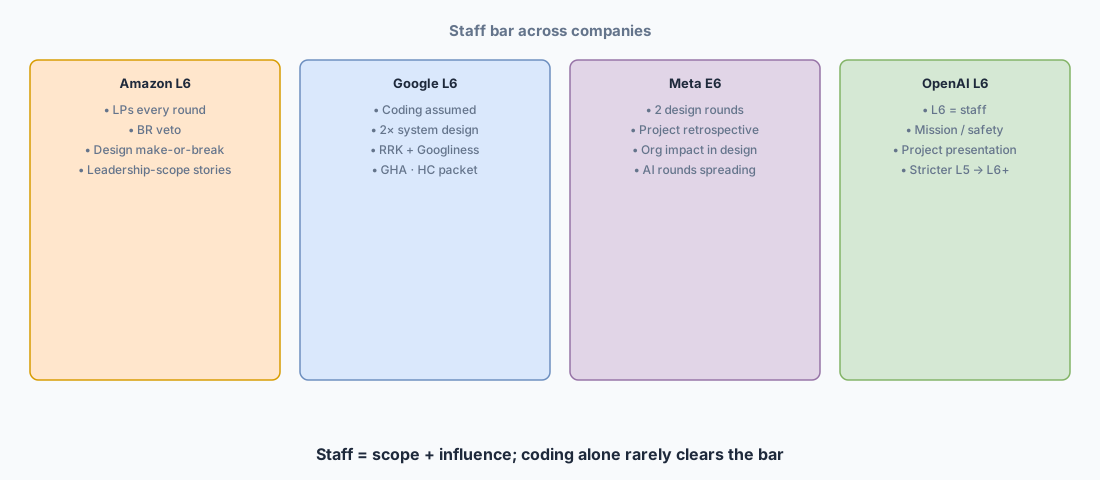
- Algorithms until mediums are boring — then timed pairs without running code (coding series)
- System design ×2: requirements, capacity, failure modes, then a second pass on org rollout and migration
- RRK deep-dive: whiteboard your best system; invite hard questions
- Googliness: conflict, feedback, ambiguity — STAR stories (behavioral)
- GHA: practice situational judgment; don’t phone it in
- Team match: research products; prepare questions that show taste
- LLD only if your track needs it — LLD series
L6: two designs and no passenger mode
L6 packets fail when coding is excellent and design stays L5-scope: single-service deep dive, no multi-team API strategy, no migration/ops story. Drive both SD rounds; treat RRK/Googliness as first-class.
Backend focus + Googleyness
Clean mediums · no run
L6: design decides
Defend a real system
Collab · ethics · ambiguity
Packet consistency
Round scripts — first 2 minutes
Lattice study path for Google
- Backend prep plan
- Coding series until mediums are boring — then timed pairs without running code
- Core concepts + patterns (simplicity > buzzwords)
- Two design passes: warm-up URL shortener + one hard breakdown with migration/ops
- Technologies — know one solid choice per layer
- Behavioral — conflict, feedback, ambiguity
- RRK dry-run: 45 minutes defending your best backend system
- This Google guide — HC vs BR, Googleyness, L5 vs L6 design weight
Signal rubric — Google strong vs weak
7-day Google plan (week before)
- D−7: Timed coding pairs (no execute) — 2× mediums.
- D−6: HLD mock #1 — requirements → numbers → failure modes.
- D−5: HLD mock #2 (L6) — add migration + org/API ownership.
- D−4: RRK dry-run of your best system (45 min).
- D−3: Googleyness stories — conflict, ethics, ambiguity aloud.
- D−2: Full mock day matching onsite mix; check packet narrative.
- D−1: Light review; sleep; team-match questions ready.