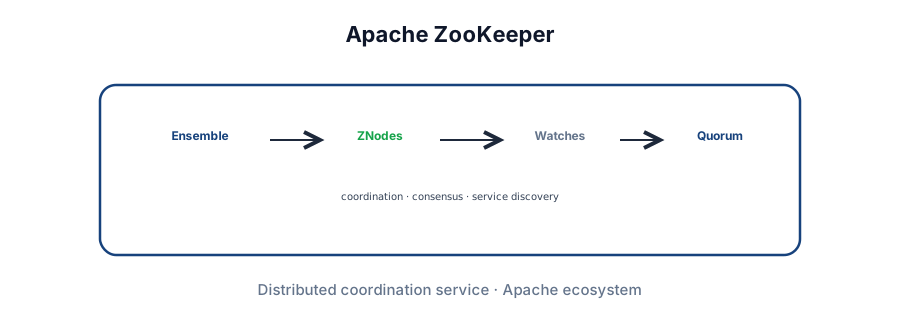
Roadmap
ZooKeeper is a coordination service — a tiny, strongly consistent metadata store with push notifications. It is not a database for app data. Released in 2008, it still powers parts of the Apache stack; Kafka moved to KRaft. The patterns matter even if you use etcd or Consul instead.
Small ZNodes (<1MB).
One-shot watches.
3/5/7 quorum.
etcd · Consul · cloud.
1 · The problem: multi-server chat
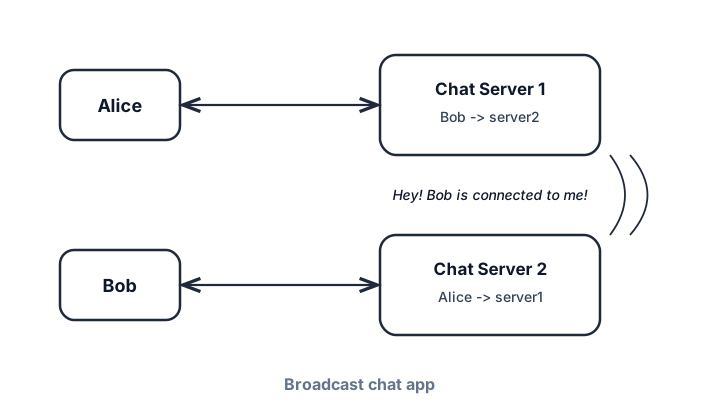
One chat server is easy — Alice and Bob share memory. Scale to two servers and Alice (Server 1) must find where Bob lives.
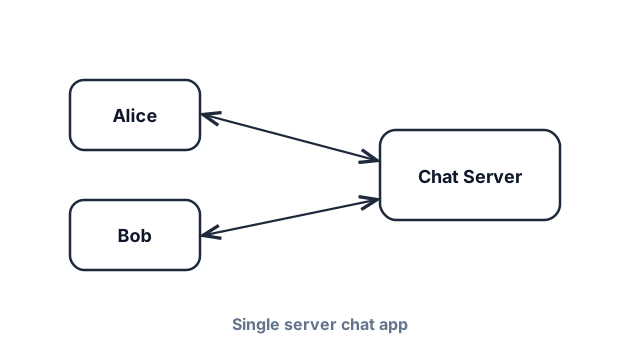
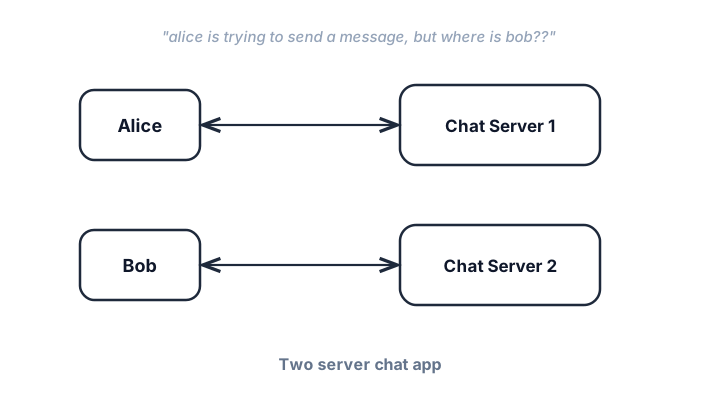
Common attempts and why they hurt:
- Central DB — works until it's a SPOF, adds latency per message, and melts under lookup load.
- Local caches — Bob moves servers; stale cache drops messages.
- Server broadcast — O(n²) connections; noisy at dozens of servers.
- Heartbeats only — network partitions create split-brain membership.
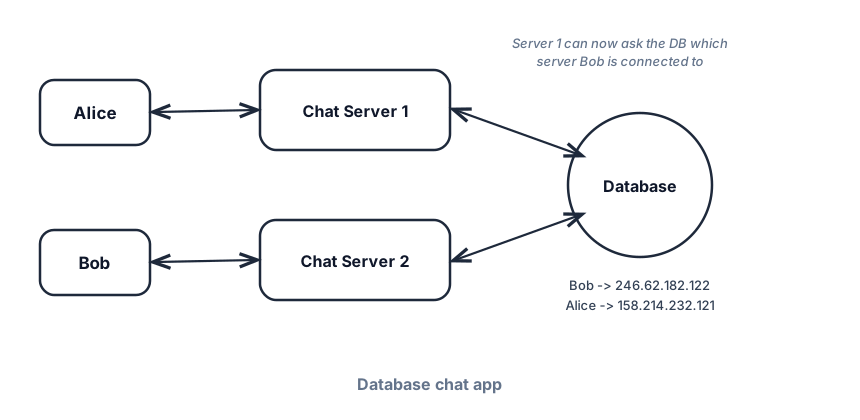
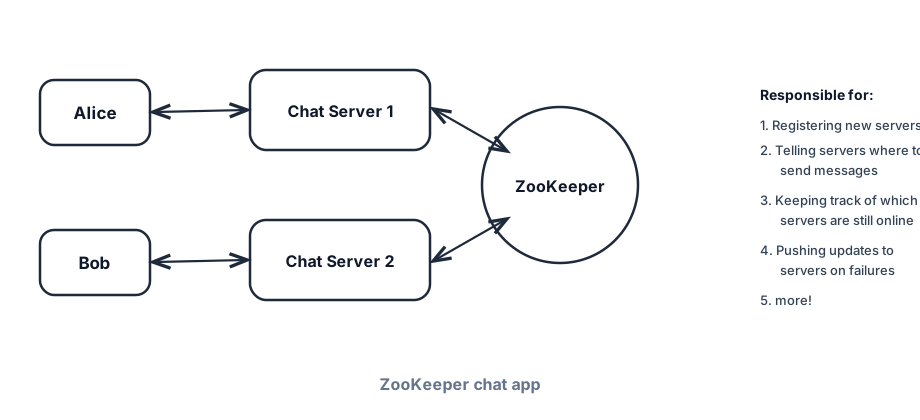
ZooKeeper's answer: one shared source of truth. Servers register; mappings update on connect; watches push changes; ephemeral nodes vanish on crash. No mesh, no DIY consensus.
2 · Three primitives
Everything in ZooKeeper is built from three ideas. Master these and the patterns in the next section click immediately.
A · ZNodes (the data model)
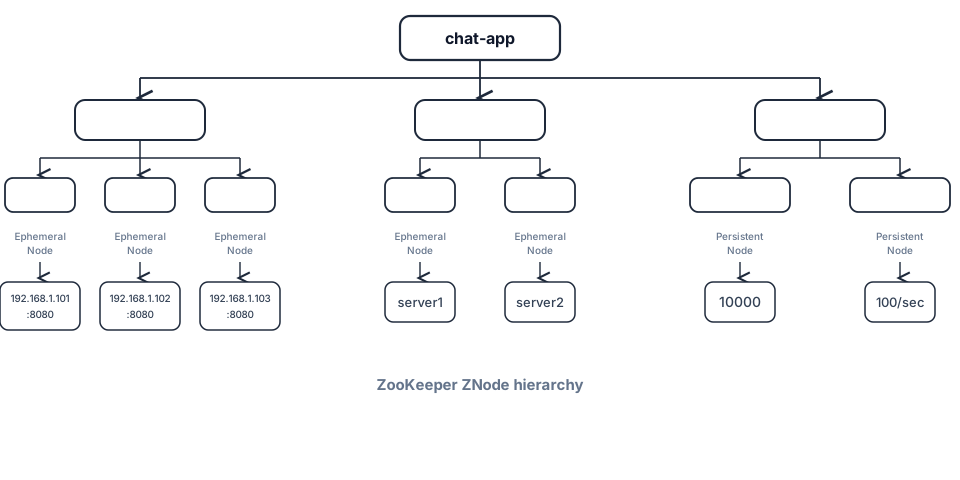
A hierarchical tree like a filesystem. Each ZNode has a path, a small payload, and metadata. Store coordination data — thousands of small nodes, not large blobs.
- Persistent — until you delete it (config, feature flags).
- Ephemeral — deleted when the client session ends (liveness, locks, presence).
- Sequential — auto suffix
…-0000000001(ordering, election, lock queues). Combine with-e.
create /chat-app/config/max_message_size "1024"          # persistent
create -e /chat-app/servers/server2 "192.168.1.102:8080"  # ephemeral
create -s -e /chat-app/leader/node- "server1"             # sequential ephemeral
B · Ensemble (high availability)
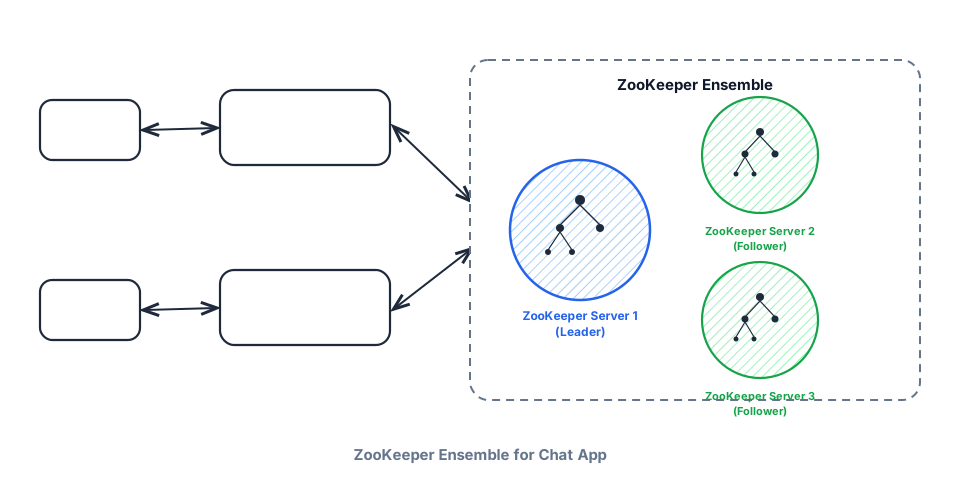
Run 3, 5, or 7 servers (odd for majority). One leader handles writes; followers serve reads and vote. Survive as long as a quorum (majority) is up — 3 nodes tolerate 1 failure; 5 tolerate 2.
ZooKeeper zk = new ZooKeeper(
    "zk1:2181,zk2:2181,zk3:2181", 3000, watcher);
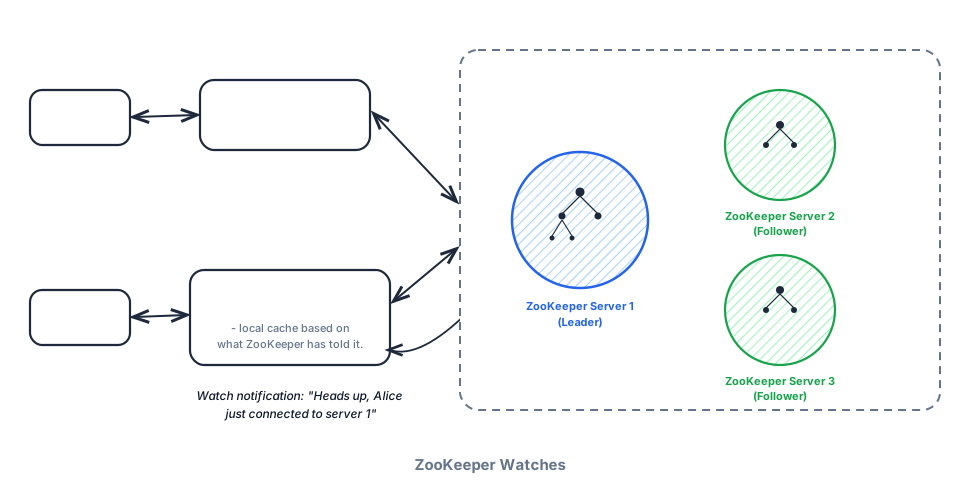
C · Watches (push, don't poll)
Ask to be notified when a ZNode changes. Watches are one-shot — re-register after each event. Pattern: keep a local cache, invalidate on watch. ZooKeeper notifies; it isn't meant for high-QPS reads on every message.
zk.getChildren("/chat-app/users", true, null);  // set watch

public void process(WatchedEvent e) {
  if (e.getType() == EventType.NodeDataChanged) {
    byte[] data = zk.getData(e.getPath(), true, null); // re-watch
    routingTable.put(/* user */, new String(data));
  }
}3 · Four patterns you build
Same three primitives → four interview-ready recipes.
Configuration
Persistent ZNodes + watches. Flip enable_reactions once; every watcher updates without restart. Use for dynamic flags — static deploy config stays in env/files or Parameter Store.
Service discovery
Ephemeral registration: create -e /services/api/instance1 "10.0.0.1:8080". Consumers list children + watch. Same idea as Consul, etcd, or Kubernetes Services.
Leader election
Each candidate creates a sequential ephemeral node. Lowest sequence = leader. Others watch their predecessor. Leader dies → node gone → next steps up. (Used historically by Kafka's controller and HBase.)
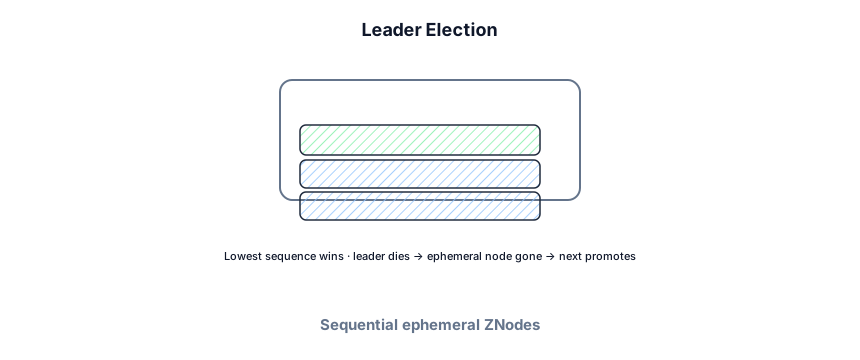
create -s -e /leader/node- "server1"  # → node-0000000001  ← leader
create -s -e /leader/node- "server2"  # → node-0000000002  watches 0001
Distributed locks
Same sequential-ephemeral queue: lowest holds the lock; waiters watch the previous node. Good for long-lived / correctness-critical locks. Bad for hundreds of acquires/sec — use Redis for ticketing-style holds.
4 · Under the hood (skim OK)
ZAB
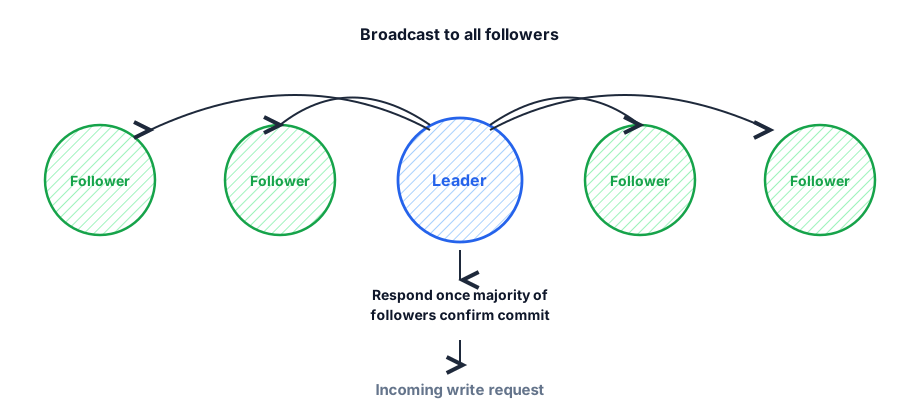
ZooKeeper Atomic Broadcast keeps the ensemble in sync. Writes go to the leader → broadcast to followers → commit after majority ACK. Same family as Raft/Paxos.
- Reads — any follower, from memory (~10:1 read:write sweet spot). May be briefly stale; call
sync()if you need latest. - Writes — leader + quorum; more expensive.
- Durability — write-ahead transaction log + periodic snapshots. Dedicated log disk matters.
- Sessions — heartbeat + timeout (often 10–30s). Expire → delete all that client's ephemeral nodes + watches.
- Partitions — minority side stops writes (no split-brain).
5 · Today: alternatives & when to use
Still used where?
HBase, Hadoop, SolrCloud, Pulsar, ClickHouse replication. Kafka historically needed ZK; KRaft removes that dependency — mention both.
- etcd — powers Kubernetes; modern APIs; same CP KV role.
- Consul — discovery + health + KV.
- Cloud — Parameter Store, Cloud Map, managed MSK — prefer when already on that cloud.
Limits
Watch hot-spots on popular nodes, expensive writes, entire dataset in RAM, non-trivial ops (JVM, txn-log disk, session tuning).
When ZK earns a box
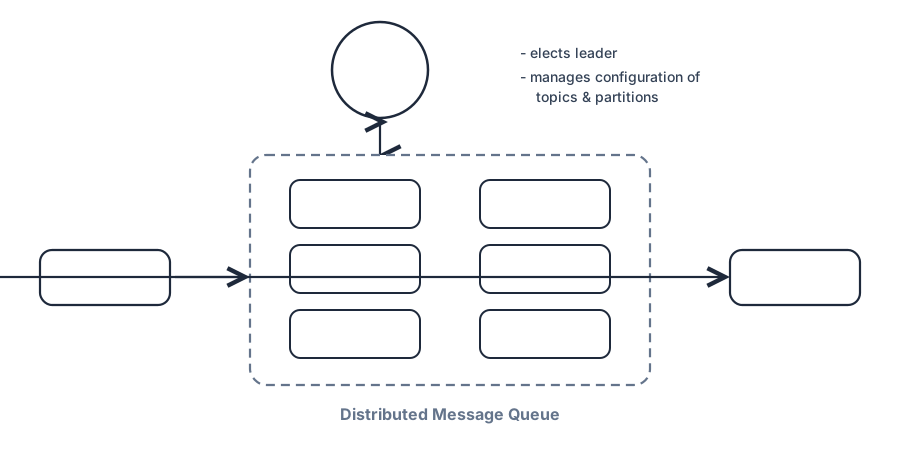
- Infrastructure design — "design a message queue": broker registration, partition leaders, consumer groups (pre-KRaft Kafka pattern).
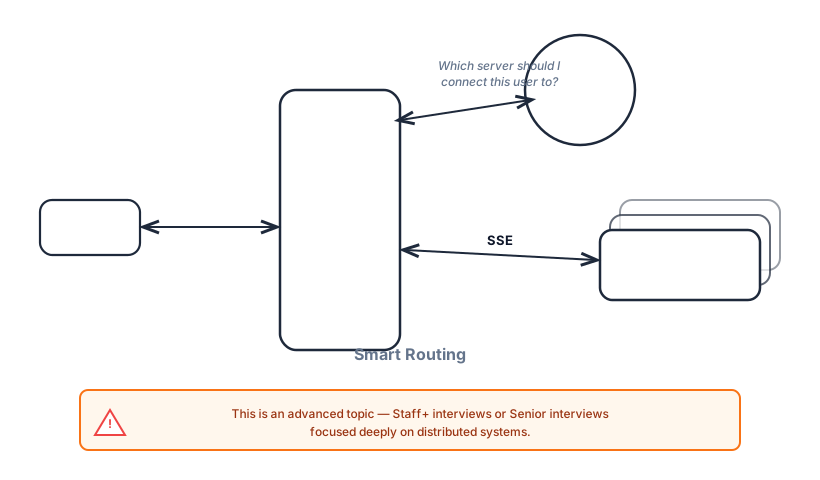
- Smart routing (Staff+) — collocate live-room users; gateway asks ZK which server owns the room.
- Hierarchical / long-lived locks — when Redis TTL semantics aren't enough.
When not to
- Typical product API on K8s — use Services / cloud discovery.
- High-frequency locks — Redis.
- Large blobs or write-heavy workloads.
Cost and performance levers
Interview Q&A
Define the coordination need first. ZooKeeper (or etcd) is how you share tiny consistent state — not how you scale the app tier.
Wrapping up
Roadmap recall: problem (shared truth) → primitives (ZNode / ensemble / watch) → patterns (config, discovery, election, locks) → ZAB/sessions if asked → prefer modern alternatives unless infrastructure design needs the classic box.
Next: Kafka (KRaft), Kubernetes (etcd), Redis locks, Key technologies.