
Negotiation by component
Hard · compounds.
Easiest high impact.
Year-1 bridge.
Pins the bands.
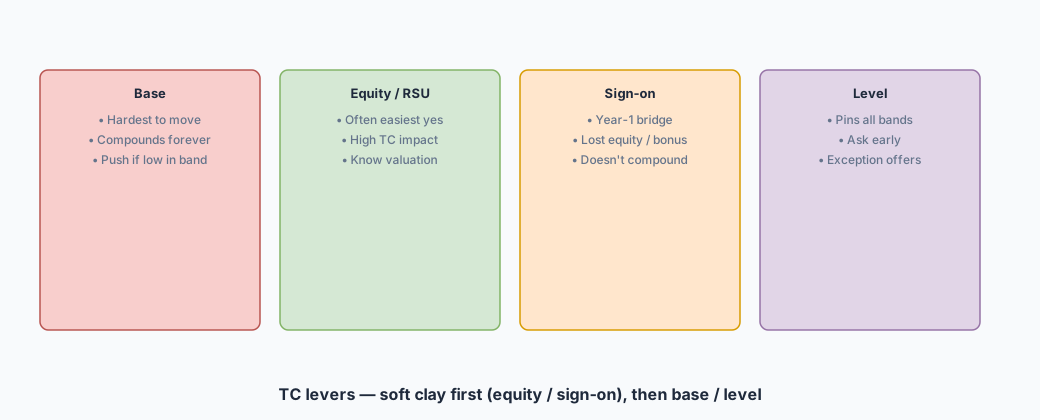
Don’t treat “the offer” as one number. Recruiters and finance have different resistance curves per lever. Push the soft clay first.
Staff lever strategy
Equity is usually the easiest high-impact lever (cash doesn’t leave on day one), but you must understand valuation and vesting — trailing averages, forward vest projections, refresh norms, and private-company liquidity. Sign-on bridges year-one holes (unvested equity, lost bonus, relocation) but does not compound. Base is hardest and most valuable long-term. Level pins everything — sometimes the real negotiation is the level, not a 3% base bump.
- If base is stuck: “Understood on base. If we can add $X RSUs and $Y sign-on, that meets what I need to sign.”
- Know refresh cadence at your level — staff refreshes can dominate year 3–4 value.
- Performance bonus % is often level-tied; negotiate clarity on payout history, not fantasy %.
Base salary
Base is a recurring cost. Every percent raise and many benefits scale off it — so finance guards it. Still worth asking when you’re low in band, under-leveled relative to peers, or location/band data supports a lift.
Equity
Equity is often the easiest “yes” because cash doesn’t leave the building on day one. But you must understand valuation and vesting:
- How is the grant priced (trailing average? projected vest dates?)
- Cliff / schedule (e.g. 1-year cliff, monthly thereafter)
- Refresh cadence and whether refreshes are expected at your level
- Private companies: liquidity, strike, 409A, tender expectations — ask explicitly
Sign-on and performance bonus
Sign-on is the duct tape of offers: one-time, liquid (usually), perfect for replacing unvested stock or a year-one TC hole. It does not compound — weigh it accordingly.
Performance bonus is often a target % of base by level — less negotiable as a number, more about clarity. Ask the manager what “meets / exceeds” looks like and historical payout ranges so you don’t over-weight a theoretical bonus.
Three safe tactics
1. Assess your position. Lock level and role type, then ask the recruiter for salary and TC bands. Strong packets and scarce skills sometimes unlock exception offers — it’s fair to ask if exceptions exist and what evidence helps.
2. Introduce competitive pressure. Another offer is ideal, but not required. Current role + upcoming promo, or the risk cost of switching, counts. Companies may ask for competing details; you are not always required to show proof. Don’t invent offers.
3. Tell one consistent story. The recruiter sells finance a narrative with numbers. If your rationale flips weekly, they stop spending political capital. Pick: competing TC, equity left behind, band midpoint, or exception for interview strength — and stick to it.
The recruiter needs a story with numbers attached to present to finance. Give them one they can sell.
BATNA: competing offers and promo path
Your best alternative to a negotiated agreement (BATNA) can be another offer or staying: upcoming promo, refresh, or the switching-risk premium of leaving unvested equity. Introduce competitive pressure after a live verbal/written offer — factually, not theatrically. Many companies ask for proof; you are not always required to show it. Never invent offers.
One sellable narrative with numbers beats weekly story flips. When finance says best-and-final through your recruiter, treat it as real.
Counter-offer scripts
After verbal offer — ask for time
When to mention another offer
Usually after a verbal/written offer exists — so you’re negotiating a live package, not auditioning. Be factual, not theatrical.
If they only move one lever
How to decide
- Compare 4-year TC (base + bonus + equity + sign-on amortized), not year-one cash alone.
- Weight level, manager, scope, and refresh culture — a higher number on a dead team is expensive.
- If two packages are within ~5–8%, pick the work; if they’re 15%+ apart, make finance earn the yes.
- Once you say best-and-final accepted, stop pecking — reputation travels inside recruiters’ networks.
Staff lever order under pressure
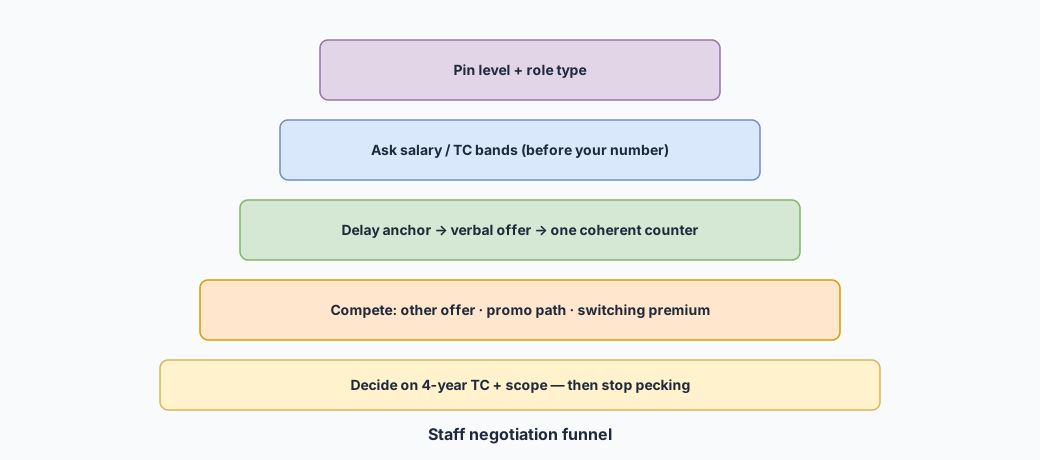
If base is frozen, push equity refresh / grant size, then sign-on, then start date / title clarity. Keep one consistent story the recruiter can sell to finance. Never negotiate base with the hiring manager in a side channel.