
The mindset that scores
Say it before the fight.
Manager / partner / org.
Rubric · RACI · review.
Habit + verification.
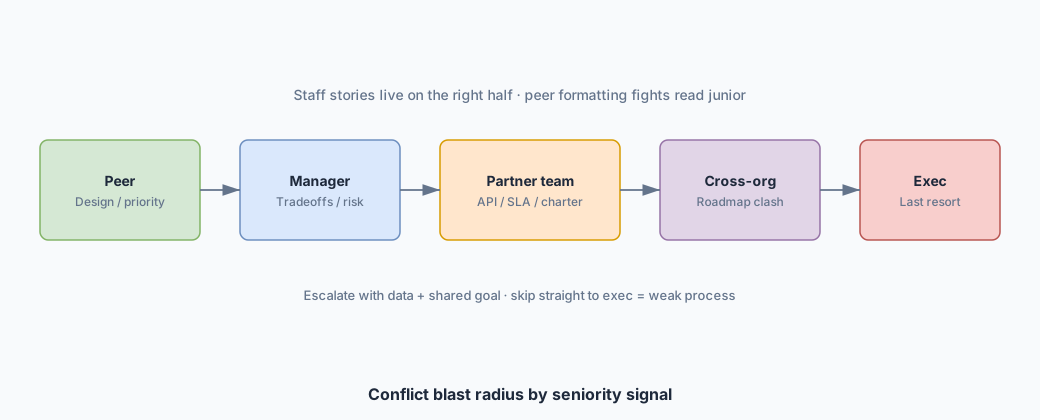
Conflict and feedback questions are coachability tests. Interviewers listen for whether you can stay in productive disagreement, and whether critical input actually changed how you work.
Conflict with a coworker
Question
Tell me about a time you had a conflict with a coworker.
Signal: Conflict resolution
What they really want: Process under heat: listening, reframing, data, durable agreement.
Staff conflict: charter & partner-team fights
At staff, “conflict with a coworker” often really means: competing roadmaps, API ownership, SLA disagreements, or a manager asking you to trade reliability for a demo. Interviewers want assertive direct-to-source behavior, data, and a durable working agreement.
- Villain narrative still fails at staff — especially about partner teams.
- Jumping to exec without peer/manager attempts looks political, not senior.
- Fake conflict (pizza toppings) wastes the only conflict slot in the loop.
Staff conflict stories end with a reusable mechanism: rubric, RACI, versioning policy, or review cadence.
Hard-to-get-along teams
Question
How do you put yourself (or someone else) into a team that is hard to get along with?
Signal: Communication + leadership
What they really want: Do you diagnose incentives and create working agreements, or preach “be nice”?
Tough / critical feedback
Pick a real weakness with consequences — not “I care too much.” Show you investigated the root behavior, changed habits, and checked if it worked.
Question
Give me an example of a tough or critical piece of feedback you received.
Signal: Growth / coachability
What they really want: Honesty + root-cause curiosity + lasting behavior change.
Likely follow-ups
Conflict pitfalls that sink hires
- Villain narrative — the other person was simply wrong; you were the hero.
- HR ending — escalation without your attempts to resolve peer-to-peer first.
- Fake conflict — “We debated pizza toppings for the launch party.”
- No learning — relationship unchanged; no new working agreement.
Strong conflict stories end with a reusable mechanism: decision rubric, RACI, design review cadence, or documented tradeoff log.
How deep to dig on feedback
Interviewers punish surface fixes (“they said communicate more, so I sent more Slack”). Show the investigation:
- What exact examples did you request?
- What root behavior did you find (not the slogan)?
- What habit or system did you install?
- How did you verify it worked weeks later?
Sample: disagreeing with your manager
Question
Tell me about a time you disagreed with your manager.
Staff conflict is charter, not tone
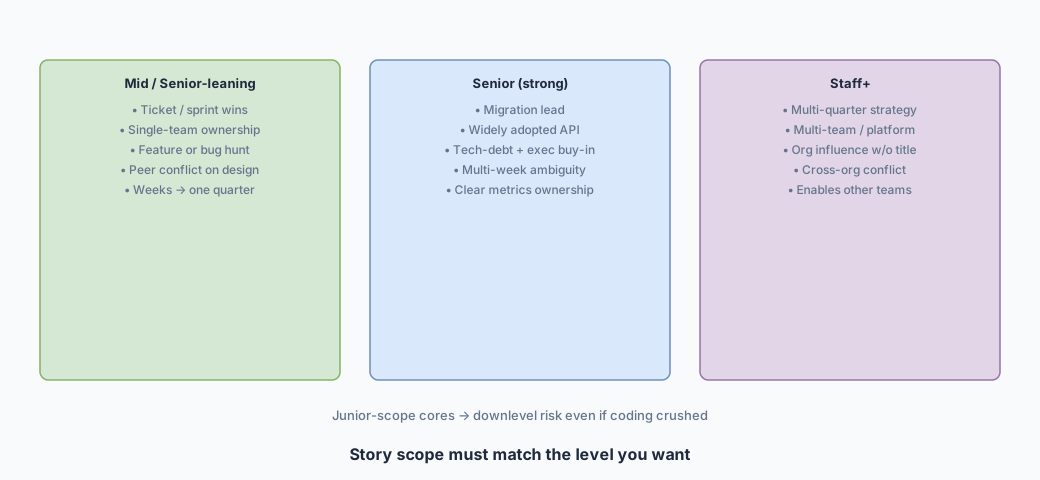
Staff conflict stories usually involve manager-level partners, shared SLOs, or org charter ambiguity. Show you sought the shared customer/metric, proposed a reversible experiment, and left the relationship stronger.
More pitfalls (conflict & feedback)
- Tone theater — “I stayed calm” with no substance on the actual disagreement.
- Principle dumping — quoting values instead of naming the risk tradeoff.
- Feedback without change — you “welcomed feedback” but nothing in your work shifted.
- Manager disagreement as rebellion — no attempt to understand constraints above you.
- Anonymous villains — “a difficult engineer” with no role, incentive, or repair.
- Charter fights as personality — staff conflict is usually ownership edges, not vibes.